

It usually starts with something small. A forgotten text message. A tone of voice that sounded slightly “off.” A dish left in the sink.
Stop the Spiral: Handling Misunderstandings Without the Drama
Table of Contents
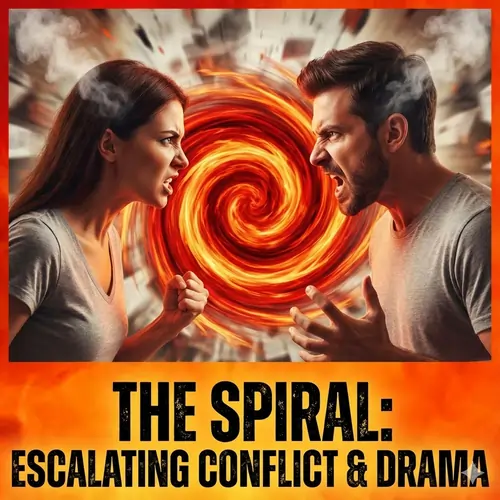
Suddenly, the air in the room changes. Your heart rate spikes. Your defenses go up. What began as a simple misunderstanding rapidly twists into a tornado of accusations, past grievances, and hurt feelings. You are no longer talking about the dish in the sink; you are talking about “respect,” “responsibility,” and “why you never listen to me.”
This is the Spiral.
We have all been there. It is that helpless feeling of watching a conversation slide off a cliff and not knowing how to pull the brakes. But here is the good news: conflict is inevitable, but drama is optional. The skill of stopping arguments before they become destructive is not a personality trait; it is a learned technique. It is a combination of emotional intelligence, nervous system regulation, and strategic communication.
In this extensive guide, we will dissect the anatomy of a fight. We will move beyond the generic advice of “just count to ten” and explore the deep psychological and practical frameworks for stopping arguments in their tracks. Whether you are dealing with a partner, a family member, or a colleague, this is your blueprint for turning conflict into connection.
The Anatomy of a Spiral: Why We Escalate
To master the art of stopping arguments, you first need to understand the biological machinery driving them. When a misunderstanding occurs, most people believe they are reacting to the facts. In reality, they are reacting to a perceived threat.
The Amygdala Hijack
Your brain has a built-in alarm system called the amygdala. Its job is to scan for danger. In prehistoric times, danger meant a sabre-toothed tiger. Today, danger means a sarcastic comment from your spouse.
When you feel criticized or unheard, your amygdala triggers the “fight or flight” response. Cortisol and adrenaline flood your bloodstream. Your rational brain (the prefrontal cortex)—the part responsible for logic, empathy, and impulse control—literally shuts down. This is why stopping arguments feels physically difficult in the heat of the moment. You are not fighting your partner; you are fighting your own biology.
The Distortion Field
Once this chemical cascade begins, you enter a distortion field. Neutral comments sound like attacks. Silence feels like rejection. You engage in “negative sentiment override,” where you interpret everything through a lens of hostility. Stopping arguments at this stage requires a massive effort of will because your brain is telling you that you are in a battle for survival.
Understanding this physiology is crucial. It helps you depersonalize the conflict. You realize that the drama isn’t happening because your relationship is doomed; it’s happening because your nervous systems are overwhelmed.

The “Soft Startup”: Prevention is Better Than Cure
Relationship researcher Dr. John Gottman discovered that the first three minutes of a conversation usually determine how it ends. If you start harsh, you end harsh. Therefore, the most effective strategy for stopping arguments is to change how they begin.
The Trap of the “You” Statement
Most arguments spiral because of accusatory language.
- Bad Startup: “You never take the trash out. You are so lazy.”
- Result: Immediate defense. The focus shifts from the trash to the insult (“I am not lazy!”).
The Power of the “I” Statement
A “soft startup” focuses on your feelings and a specific need, not the other person’s character.
- Good Startup: “I feel overwhelmed when the kitchen is messy. I would really appreciate it if you could take the trash out.”
- Result: No attack to defend against. The focus remains on the specific issue.
Mastering the soft startup is a proactive way of stopping arguments before the first shot is even fired. It signals to the other person, “I am unhappy with a situation, but I am not attacking you.”
The Red Zone: Recognizing the Turn
You won’t always catch the startup. Sometimes, you are already five minutes in, and voices are rising. This is “The Turn”—the moment a conversation shifts from productive to destructive. Recognizing this moment is the single most critical skill for stopping arguments.
Physical Cues
Your body knows you are in a fight before your mind does. Watch for these signs:
- A tightening in the chest or throat.
- Clenched jaw or fists.
- Heat rising in the face.
- An urge to interrupt or talk over the other person.
When you feel these sensations, you have entered the Red Zone. Continuing to talk in this state is useless. You are physically incapable of empathy. The goal of stopping arguments here shifts from “resolving the issue” to “regulating the body.”
Tactical De-Escalation: How to Hit Pause
So, you are in the Red Zone. The spiral is spinning. How do you stop it? You need a circuit breaker. Here are proven tactics for stopping arguments mid-flow.
1. The Strategic Time-Out
This is not the same as storming out. Storming out creates abandonment anxiety. A strategic time-out is a communicated break.
- Script: “I am feeling really heated right now and I don’t want to say something I regret. I need twenty minutes to cool down, and then we can finish this conversation.”
- Why it works: It reassures the partner that you are coming back (safety) while giving your cortisol levels time to drop (regulation). This is the gold standard for stopping arguments.
2. The Volume Drop
We naturally match the volume of the person we are speaking to. If they yell, we yell. You can hack this mirror neuron response.
- Technique: Deliberately lower your voice to a whisper or a very calm, low tone.
- Result: The other person often unconsciously lowers their voice to match you. Stopping arguments often starts with lowering the decibel level.
3. The Validation Pivot
Arguments often spiral because one person feels unheard. They repeat themselves louder and louder hoping to penetrate your defenses.
- Technique: Stop defending your point and simply validate theirs.
- Script: “I hear that you are frustrated about the schedule. It makes sense that you feel ignored.”
- Result: This deflates the balloon. Once a person feels heard, they stop fighting to be heard. It is a magic trick for stopping arguments.
Decoding the Misunderstanding: It’s Never About the Dishes
To become proficient at stopping arguments, you must become a translator. You need to hear what is being said underneath the words.
Surface Content vs. Root Cause
- Surface: “You bought the wrong brand of milk!”
- Root: “I feel like you don’t pay attention to what matters to me.”
- Surface: “Why are you always on your phone?”
- Root: “I am lonely and I miss connecting with you.”
When you address the surface (the milk), you end up in a debate about dairy products. When you address the root (the attention), you connect. Stopping arguments requires you to ignore the bait (the surface complaint) and address the hook (the emotional need).
Identifying Triggers
We all have “raw spots”—emotional sensitivities from our past. Maybe you were criticized heavily as a child, so you are hyper-sensitive to feedback. Maybe you were ignored, so silence feels like punishment. When a partner touches a raw spot, our reaction is often disproportionate to the event. Recognizing your own triggers is essential for stopping arguments. It allows you to say, “I am reacting strongly because this reminds me of X,” rather than “You are a jerk for doing X.”
The Art of Listening: The Antidote to Drama
If there is a superpower in the realm of stopping arguments, it is active listening. Most of us listen with the intent to reply, not to understand. We are drafting our rebuttal while the other person is still speaking.
Reflective Listening
This technique involves repeating back what you heard to ensure accuracy.
- You: “So, what I am hearing is that you are upset because I didn’t call when I was late, and that made you worry about my safety. Is that right?”
- Partner: “Yes, exactly.”
This accomplishes two things:
- It ensures you aren’t misunderstanding the issue.
- It shows the partner they are seen. Stopping arguments is impossible if you are arguing against a point the other person isn’t even making. Reflective listening aligns your realities.
Curiosity Over Judgment
Judgment kills connection. Curiosity builds it. Instead of asking “Why did you do that?” (which sounds accusatory), ask “Help me understand what was going on for you when that happened.” Adopting a posture of curiosity changes the dynamic from “Me vs. You” to “Us vs. The Problem.” It is a subtle shift that is highly effective for stopping arguments.
Emotional Regulation: Your Personal Responsibility
You cannot control how the other person acts. You can only control how you react. Therefore, stopping arguments is largely an inside job.
Self-Soothing Techniques
When you are in the time-out, or even during the conversation, you need tools to settle your nervous system.
- Box Breathing: Inhale 4, Hold 4, Exhale 4, Hold 4. This signals safety to the brain.
- Grounding: Feel your feet on the floor. Notice the texture of the chair. Bring your awareness out of your head and into your body.
- Mantra: Repeat a phrase like “We are okay,” or “This is just a moment.”
By regulating yourself, you stop adding fuel to the fire. In many cases, stopping arguments simply requires one person to refuse to escalate. Be that person.
Repair Attempts: The Secret Weapon of Happy Couples
Gottman’s research found that happy couples fight just as much as unhappy couples. The difference? Happy couples use “repair attempts.”
A repair attempt is any statement or action—silly or serious—that prevents negativity from escalating out of control. It is a mini-gesture aimed at stopping arguments mid-stream.
Examples of Repair Attempts
- Humor: Making a silly face or a joke (only if the tension isn’t too high).
- Touch: A gentle hand on the arm or a hug.
- Yielding: “You know what? You have a point there.”
- The “Stop” Sign: “Whoa, this is getting off track. Let’s reset.”
If your partner makes a repair attempt, your job is to accept it. Catch the olive branch. If you swat it away, you signal that being “right” is more important than being close. Stopping arguments relies on recognizing and receiving these small flags of peace.
Common Barriers to Stopping Arguments
Even with the best tools, we get stuck. Why? Because our ego gets involved. Here are the most common barriers to stopping arguments and how to overcome them.
The Need to Be Right
We often treat arguments like a court case where we must prove the other person wrong.
- The Fix: Ask yourself, “Do I want to be right, or do I want to be happy?” In a relationship, if one person “wins,” both people lose. Stopping arguments requires surrendering the need for victory.
The “Kitchen Sinking”
This is when you throw every past grievance into the current argument. “And another thing, in 2018 you forgot my birthday!”
- The Fix: One issue at a time. If you are arguing about dishes, stay on dishes. If you bring up the past, you make stopping arguments impossible because the scope becomes too large to manage.
Mind Reading
“I know you did that just to annoy me.” You are assigning motive.
- The Fix: Stick to the facts. You do not know their motive; you only know their action. Assume positive intent until proven otherwise. This assumption is a catalyst for stopping arguments.
Post-Argument Repair: The Aftermath
Stopping arguments isn’t just about the heat of the moment; it is about how you reconnect afterward. If you stop the shouting but stay cold for three days, you haven’t really resolved anything.
The “After the Storm” De-brief
Once everyone is calm (perhaps the next day), revisit the issue without the emotion.
- “What happened there?”
- “What triggered you?”
- “How can we do that better next time?”
This meta-conversation turns a fight into a lesson. It builds a roadmap for stopping arguments in the future because you learn each other’s manuals.
Reconnection Rituals
After a conflict, the bond feels threatened. You need to reaffirm the relationship.
- A 20-second hug.
- A sincere apology for your part in the drama.
- An affirmation of love (“I hate fighting with you because I love you so much”). These rituals seal the cracks caused by the conflict.
Prevention: Building a Culture of Peace
The ultimate level of mastery in stopping arguments is creating an environment where they are less likely to happen in the first place.
The Emotional Bank Account
Stephen Covey coined this term. Every positive interaction (a compliment, a help with chores, a listening ear) is a deposit. Every negative interaction is a withdrawal. If your account is full, a misunderstanding is just a glitch. If your account is overdrawn, a misunderstanding is a crisis. Keep your bank account full. It acts as a buffer, automatically stopping arguments from escalating because there is a foundation of goodwill.
Regular Check-Ins
Don’t wait for a crisis to talk. Have a weekly “State of the Union” meeting.
- “What went well this week?”
- “Is there anything bothering you?”
- “How can I support you next week?” Clearing the air regularly prevents resentment from building up. It is a proactive strategy for stopping arguments before they even spawn.
Dealing with High-Conflict Personalities
Sometimes, you are dealing with someone who thrives on drama. Stopping arguments with a high-conflict person requires firmer boundaries.
The JADE Technique
Do not Justify, Argue, Defend, or Explain. High-conflict people feed on your emotional reaction. If you JADE, you give them fuel.
- Strategy: Be boring. State your boundary (“I am not discussing this while you are yelling”) and follow through. Stopping arguments with toxic people often means physically removing yourself from their presence.
The Role of Technology in Arguments
In the digital age, many arguments happen over text. This is a disaster zone for misunderstandings.
The “No Text Fighting” Rule
Text lacks tone, facial expression, and nuance. It is the worst possible medium for conflict.
- The Rule: If a text exchange becomes heated, stop. Pick up the phone or wait until you are in person.
- Stopping arguments over text is as simple as typing: “I care about you too much to do this over text. Let’s talk later.”
Forgiving Yourself
You will fail. You will read this guide, vow to be a Zen master, and then lose your temper next Tuesday. That is okay. Stopping arguments is a practice, not a destination. When you mess up, apologize. Repair. Try again. The goal is not perfection; the goal is shorter lag time between the rupture and the repair.
FAQs About Stopping Arguments
1. Is it healthy to stop an argument by just walking away?
Yes, but with a caveat. Simply walking away can feel like abandonment (stonewalling). To be effective at stopping arguments, you must communicate why you are walking away (“I need to cool down”) and when you will return (“I’ll be back in 20 minutes”). This turns “walking away” into a “strategic time-out.”
2. How do I stop arguments if my partner refuses to calm down?
You cannot control your partner, but you can control your participation. An argument requires two people. If you refuse to engage in the spiral—by keeping your voice low, not defending, and maintaining boundaries—the argument usually runs out of oxygen. Stopping arguments sometimes means letting the other person vent until they tire out, provided they are not being abusive.
3. Does stopping arguments mean I have to suppress my feelings?
No. Stopping arguments is about stopping the destructive behavior (yelling, insulting), not suppressing the issue. You should absolutely discuss your feelings, but do it when you are regulated. You are hitting pause, not delete.
4. What if we keep having the same argument over and over?
This is a sign of a gridlocked conflict, usually tied to deep-seated values or dreams. Stopping arguments of this nature requires a different approach: stop trying to “solve” it and start trying to understand the underlying dream or fear driving the other person’s stance. You need dialogue, not debate.
5. Can counseling help with stopping arguments?
Absolutely. A therapist can act as a referee and a translator. They can teach you specific tools for stopping arguments that are tailored to your unique dynamic. It is not a sign of failure; it is a sign of commitment to the relationship.
Conclusion
Conflict is the price of admission for intimacy. If you are close to someone, you will step on their toes. The measure of your relationship is not how often you fight, but how quickly you can pivot from conflict back to connection.
The next time you feel the temperature rising, remember the Spiral. Remember that your biology is trying to hijack you. Take a deep breath. Lower your voice. Get curious.
You have the power to change the trajectory of the conversation. By mastering the skills of stopping arguments, you are doing more than just avoiding drama; you are building a safe harbor for the people you love. Peace is not the absence of conflict; it is the ability to handle conflict with grace. You can break the cycle. It starts with one deep breath.