
It is the longest relationship you will ever have. It is the only relationship that is guaranteed to last from your very first breath until your very last. It is the relationship you have with yourself.
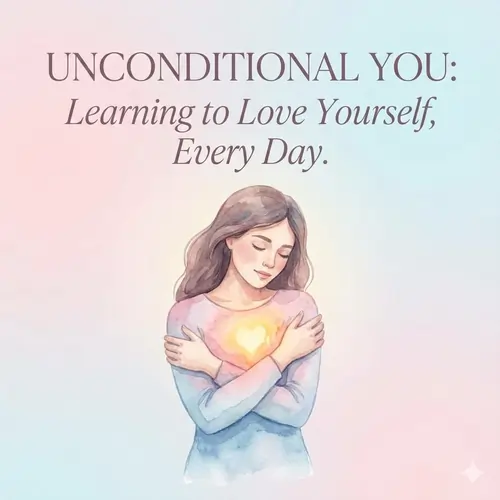
Unconditional You: Quotes to Help You Love Yourself More Every Day
Table of Contents
Yet, for many of us, this relationship is the most neglected, the most critical, and the most fraught with tension. We are often our own worst enemies, speaking to ourselves in a tone we would never dare use with a friend. We withhold affection until we lose ten pounds, get the promotion, or find a partner. We place conditions on our own worthiness.
This article is an invitation to drop those conditions.
Learning to love yourself is not a destination you arrive at once; it is a daily practice. It is not about vanity or narcissism; it is about survival and sanity. When you master the art of learning to love yourself, you stop begging the world for the validation you should be giving yourself. You become whole.
In this extensive guide, we will explore the psychology of self-worth, actionable strategies for silencing your inner critic, and a curated collection of powerful quotes that act as anchors for your journey. We aren’t just reading these words; we are using them to rebuild the foundation of who we are.
Part 1: The Psychology of the Inner Critic
To understand why learning to love yourself is so difficult, we must first understand why self-loathing feels so natural.
Psychologically, the human brain has a “negativity bias.” We are wired to scan for threats and problems. In modern life, where we aren’t running from predators, that scanning mechanism turns inward. We scan ourselves for flaws. We mistakenly believe that if we are hard on ourselves—if we bully ourselves into perfection—we will be safe from the judgment of others.
This is a lie. Self-criticism does not protect you; it weakens you.
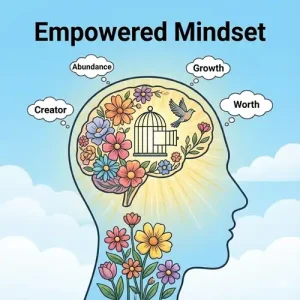
Learning to love yourself requires a cognitive override. You have to interrupt the neural pathways that say, “I am not enough,” and replace them with new pathways that say, “I am worthy simply because I exist.” This is neuroplasticity in action. Every time you choose self-compassion over self-judgment, you are physically rewiring your brain.
The “Unlearning” Process
Before you can start learning to love yourself, you have to do some “unlearning.” You have to unlearn the voices of critical parents, mean teachers, or societal standards that told you your value was tied to your productivity or your appearance.
Reflect on this: When a baby is born, we do not ask what it has achieved. We do not ask if it has earned its place. We love it simply because it is alive. Learning to love yourself is the process of returning to that original state of unconditional worth.
Part 2: The Foundations of Self-Love
True self-love stands on three pillars: Forgiveness, Acceptance, and Boundaries. Without these, affirmations are just empty words.
1. Radical Forgiveness
You cannot love someone you are holding a grudge against. Many of us are holding massive grudges against our past selves. We hate ourselves for the money we wasted, the relationships we stayed in too long, or the opportunities we missed.
Learning to love yourself means looking at your past self with empathy. You did the best you could with the knowledge and emotional tools you had at the time. To move forward, you must issue a full pardon to your younger self.
2. Radical Acceptance
We often think, “I will love myself when I am organized,” or “when I am fit.” That is not love; that is a transaction. Learning to love yourself means loving the messy, disorganized, imperfect version of you that exists right now, today. It means accepting your shadow side—your jealousy, your fear, your anger—as part of the human experience.
3. Radical Boundaries
Self-love is an action. One of the clearest ways to practice learning to love yourself is by setting boundaries. When you say “no” to things that drain you, you are saying “yes” to your own well-being. You are teaching others that your time and energy are valuable.
Part 3: Quotes for the Journey (Categorized)
Quotes are powerful because they distill complex truths into memorable mantras. Use these sections as a toolkit. When you are struggling with a specific aspect of learning to love yourself, turn to the corresponding category.
Category A: Quotes on Worthiness and “Enoughness”
These quotes are for the days when you feel like you need to earn your space in the world.
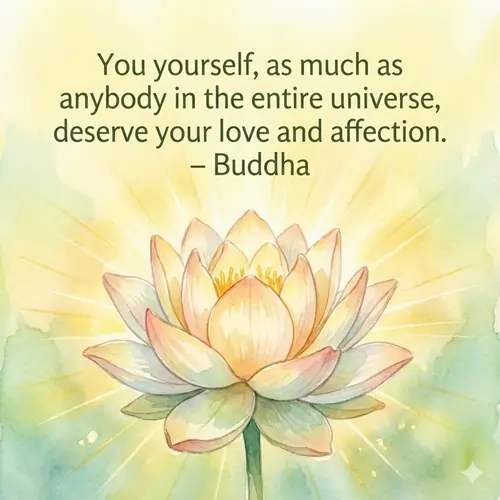
1. “You yourself, as much as anybody in the entire universe, deserve your love and affection.” — Buddha
Analysis: This is the cornerstone of learning to love yourself. We easily give love to others—our kids, our spouses, our pets. We must direct that same beam of light inward.
2. “You are enough just as you are. Each emotion, everything in your life, is a task that needs to be moved aside so you can touch your heart.” — Ram Dass
Analysis: There is nothing to add and nothing to subtract. Learning to love yourself is about realization, not improvement.
3. “Owning our story and loving ourselves through that process is the bravest thing that we’ll ever do.” — Brené Brown
Analysis: Shame thrives in secrecy. When you own your story—mistakes and all—shame loses its power.
4. “To be beautiful means to be yourself. You don’t need to be accepted by others. You need to accept yourself.” — Thich Nhat Hanh
Analysis: External validation is an addiction that can never be satisfied. Learning to love yourself breaks the addiction.
5. “Your relationship with yourself sets the tone for every other relationship you have.” — Robert Holden
Analysis: If you tolerate disrespect from yourself, you will tolerate it from others.
Category B: Quotes on Silencing the Inner Critic
Use these when that nagging voice in your head gets too loud.
6. “Talk to yourself like you would to someone you love.” — Brené Brown
Analysis: Would you tell your best friend they are a failure for making a mistake? No. Learning to love yourself means adopting the tone of a supportive friend.
7. “If you have the ability to love, love yourself first.” — Charles Bukowski
Analysis: It is the prerequisite for all other forms of love.
8. “Self-love is the source of all our other loves.” — Pierre Corneille
Analysis: You cannot pour from an empty cup. Learning to love yourself fills the reservoir so you can give to others.
9. “Be the love you never received.” — Rune Lazuli
Analysis: This is powerful for those with childhood trauma. You can reparent yourself. Learning to love yourself is an act of healing the inner child.
10. “Don’t sacrifice yourself too much, because if you sacrifice too much there’s nothing else to give, and nobody will care for you.” — Karl Lagerfeld
Category C: Quotes on Body Image and Physical Self
Learning to love yourself includes loving the vessel you live in.
11. “And I said to my body. softly. ‘I want to be your friend.’ it took a long breath. and replied, ‘I have been waiting my whole life for this.’” — Nayyirah Waheed
Analysis: Your body is not the enemy. It is fighting for you every second, digesting food and pumping blood. Treat it as an ally.
12. “Feeling beautiful has nothing to do with what you look like.” — Emma Watson
Analysis: Beauty is an energy, not a measurement.
13. “Your body is an instrument, not an ornament.” — Kite Sisters
Analysis: Shift your focus from how your body looks to what it can do.
Part 4: Actionable Strategies for Learning to Love Yourself
Quotes are the inspiration, but we need application. How do you actually practice learning to love yourself on a Tuesday morning when you are late for work and feel like a mess?
1. The Mirror Work Technique
Popularized by Louise Hay, this is intense but transformative. Stand in front of a mirror. Look into your own eyes. Say, “I love you. I really, really love you.” At first, you might feel silly. You might even cry or feel angry. That is resistance leaving the body. Keep doing it. Learning to love yourself requires facing yourself.
2. The “Stop” Command
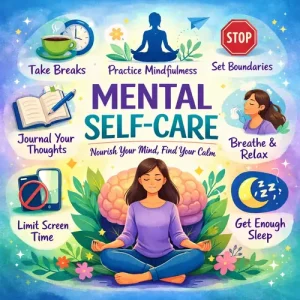
When you catch yourself spiraling into self-criticism (e.g., “I’m so stupid, I always mess up”), physically visualize a stop sign. Say “Stop” out loud. Then, rephrase the thought.
- Old thought: “I’m stupid.”
- New thought: “I made a mistake, and that is okay. I am learning.” This is cognitive behavioral therapy (CBT) in a nutshell. Learning to love yourself is about editing your internal script.
3. Date Yourself
We wait for partners to take us to nice dinners or buy us flowers. Why wait? Take yourself to the movies. Buy the high-quality sheets. Cook a nourishing meal just for you. Treat yourself like a beloved guest in your own home. This signals to your subconscious that you are worthy of effort.
Part 5: Navigating Setbacks in Self-Love
The journey of learning to love yourself is not linear. You will have days where you slide back into old habits. You will have days where you look in the mirror and dislike what you see.
This is normal.
Do not use your failure to love yourself as another reason to hate yourself. That creates a meta-layer of shame. When you slip up, be gentle. Say, “I am having a hard self-esteem day, and that is allowed. I will try again tomorrow.”
Learning to love yourself includes loving the part of you that struggles to love yourself. It is an all-encompassing embrace.
More Quotes for the Hard Days
14. “You have been criticizing yourself for years and it hasn’t worked. Try approving of yourself and see what happens.” — Louise Hay
Analysis: If punishment worked, you would be perfect by now. Try kindness as a strategy.
15. “Love yourself enough to set boundaries. Your time and energy are precious. You get to choose how you use it. You teach people how to treat you by deciding what you will and won’t accept.” — Anna Taylor
Analysis: Boundaries are the fence that protects the garden of your soul.
16. “This is not the moment to wither. This is the moment to bloom.” — Unknown
17. “Gonna love myself. No, I don’t need anybody else.” — Hailee Steinfeld
18. “Love is the great miracle cure. Loving ourselves works miracles in our lives.” — Louise Hay
Part 6: The Ripple Effect of Self-Love
One of the biggest barriers to learning to love yourself is the fear of being selfish. We are taught that self-sacrifice is noble.
However, self-love is actually the most generous thing you can do for the world. When you are insecure, you need constant reassurance from others. You are needy. You project your insecurities onto your partner. You compete with your friends.
When you succeed in learning to love yourself, you become a fountain, not a drain. You enter a room full, so you can overflow onto others. You love people freely because you don’t need them to fix you. Your relationships become healthier because they are based on choice, not desperation.
The Legacy of Self-Love
If you are a parent, learning to love yourself is the greatest lesson you can teach your children. You can tell them to have high self-esteem, but if they see you picking apart your body in the mirror or apologizing for your existence, they will model that behavior. To raise children who love themselves, you must go first. You must model what unconditional self-regard looks like.
Part 7: Journaling Prompts for Self-Discovery
Writing is a powerful tool for learning to love yourself. It gets the poison out of your head and onto the paper. Here are 5 prompts to start your morning or end your day.
- What is one thing I am forgiving myself for today?
- Goal: Release the heaviness of the past.
- What are three non-physical things I love about myself?
- Goal: Shift value from appearance to character.
- If I truly loved myself, what decision would I make in this situation?
- Goal: Use self-love as a compass for decision making.
- How did I advocate for myself today?
- Goal: Recognize boundaries as acts of love.
- What does my inner child need to hear right now?
- Goal: Provide the comfort you may be seeking externally.
Part 8: A Final Collection of Wisdom
To round out your toolkit, here are 12 more essential quotes to support you as you continue learning to love yourself.
19. “The most terrifying thing is to accept oneself completely.” — Carl Jung
20. “Trust yourself. You know more than you think you do.” — Benjamin Spock
21. “Do not let the behavior of others destroy your inner peace.” — Dalai Lama
22. “You are not a drop in the ocean. You are the entire ocean in a drop.” — Rumi
23. “A man cannot be comfortable without his own approval.” — Mark Twain
24. “Scarcity of self-value cannot be remedied by money, recognition, affection, attention or influence.” — Gary Zukav
25. “Find the love you seek, by first finding the love within yourself. Learn to rest in that place within you that is your true home.” — Sri Sri Ravi Shankar
26. “Whatever you are doing, love yourself for doing it. Whatever you are feeling, love yourself for feeling it.” — Thaddeus Golas
27. “Dare to love yourself as if you were a rainbow with gold at both ends.” — Aberjhani
28. “If you can’t love yourself, how in the hell you gonna love somebody else?” — RuPaul
29. “Lighten up on yourself. No one is perfect. Gently accept your humanness.” — Deborah Day
30. “I am my own experiment. I am my own work of art.” — Madonna
FAQs About Learning to Love Yourself
1. Is learning to love yourself selfish?
No. This is the most common misconception. Selfishness is lacking consideration for others. Self-love is having consideration for yourself so that you have the capacity to consider others. When you are burned out and insecure, you cannot effectively help anyone. Learning to love yourself allows you to give from a place of abundance rather than depletion.
2. How long does learning to love yourself take?
It is a continuous process, not a one-time event. However, psychology suggests that it takes about 21 to 66 days to form a new habit. If you practice self-compassion and affirmations consistently for a month, you will start to notice a shift in your internal dialogue. The journey of learning to love yourself gets easier with time, as new neural pathways are formed.
3. Can I love myself if I have anxiety or depression?
Absolutely. In fact, self-love is even more critical when you are struggling with mental health. Learning to love yourself while depressed means accepting that you are struggling without judging yourself for it. It means treating yourself with extra gentleness, like you would a friend who is sick. It involves seeking help and taking your medication as acts of self-care.
4. What if I feel like I’m faking it?
“Fake it ’til you make it” is actually a valid psychological strategy. When you start learning to love yourself, it will feel unnatural because you are used to self-criticism. Saying “I love myself” might feel like a lie at first. Do it anyway. You are reprogramming your subconscious. Over time, the cognitive dissonance will fade, and the feeling will become genuine.
5. How do boundaries relate to learning to love yourself?
Boundaries are self-love in action. If you let people walk all over you, you are sending a message to your subconscious that your needs don’t matter. By saying “no” to toxic behaviors or excessive demands, you are actively protecting your well-being. You cannot succeed in learning to love yourself without learning to set limits with others.
Conclusion: The Vow to Yourself
Learning to love yourself is the work of a lifetime. It is not a switch you flip; it is a garden you tend. There will be weeds. There will be droughts. But if you show up every day with water and sunlight, something beautiful will grow.
Make a vow today. Not a vow to be perfect, but a vow to be on your own team. Decide that from this moment forward, you will stop being your own bully and start being your own protector.
Read these quotes. Write them on your mirror. But more importantly, believe them. You are worthy of the love you keep trying to give to everyone else. It is time to bring it home.