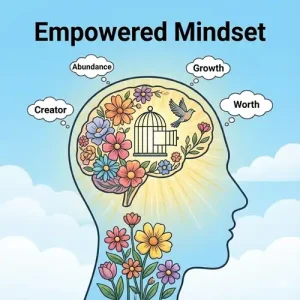

We live in the era of the “Glow Up.” Scroll through TikTok or Instagram, and you will see thousands of before-and-after transitions. The narrative is usually the same: a woman changes her hair, updates her wardrobe, hits the gym, and suddenly, she is happy. She has “glowed up.”

The Glow Up Starts Within: Feeling Good in Your Own Skin
Table of Contents
But if we are honest with ourselves, we know that visual transformation is only half the story. We have all bought the expensive dress or lost the weight, only to look in the mirror and still feel that nagging sense of inadequacy. That is because a true glow up isn’t about changing the skin you are in; it is about changing how you feel while inhabiting it.
Feeling good in your own skin is the ultimate freedom. It is the state where your internal worth is no longer tethered to external validation. It is a quiet confidence that says, “I am enough,” regardless of whether you are wearing sweatpants or a ballgown. It is not about reaching a state of perfection; it is about reaching a state of peace.
In this extensive guide, we will dismantle the beauty myths that keep us small. We will explore the psychology of body image, the power of somatic connection, and the practical, daily habits that cultivate genuine confidence. If you are tired of performing for an audience and ready to start living for yourself, this is your roadmap to feeling good in your own skin.
The Psychology of Body Image: Why We Struggle
To understand how to reach the destination of feeling good in your own skin, we first have to understand the roadblocks. Why is it so hard to simply exist without judgment?
The Mirror vs. The Mind
Body dysmorphia and general dissatisfaction often stem from a disconnect between reality and perception. When you look in the mirror, you aren’t just seeing a reflection. You are seeing a projection of your past traumas, societal conditioning, and current emotional state.
Feeling good in your own skin is rarely about the physical skin itself. It is about the mental lens through which you view it. If that lens is scratched by years of comparison and criticism, no amount of skincare or dieting will fix the view. The work begins in the neural pathways, not the dermatology clinic.
The Social Media Distortion
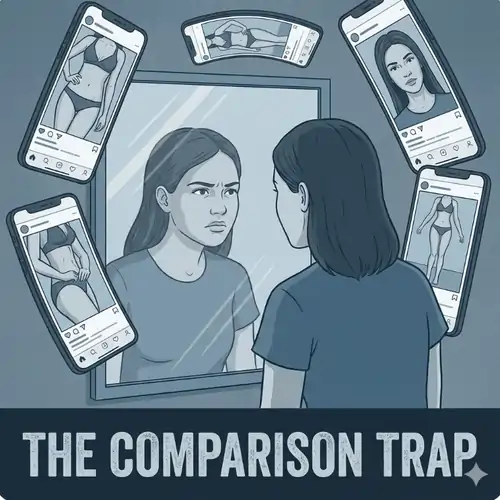
We are the first generation to carry a global beauty pageant in our pockets 24/7. We are constantly exposed to curated, filtered, and surgically altered images. This creates a subconscious baseline of “normal” that is actually unattainable. When you are bombarded with perfection, feeling good in your own skin becomes an act of rebellion. It requires you to consciously reject the digital illusion and ground yourself in your physical reality. It means acknowledging that pores, texture, and fluctuations are features of being human, not failures of being a woman.
Pillar 1: Moving From Body Positivity to Body Neutrality
For years, the movement was “Body Positivity”—the idea that you must love every inch of yourself every day. While noble, this can feel toxic and impossible on days when you feel bloated or tired. A more sustainable path to feeling good in your own skin is Body Neutrality.
What is Body Neutrality?
Body Neutrality removes the moral imperative to think you are beautiful. It suggests that your body is simply a vehicle for your life. It is the vessel that allows you to hug your children, climb mountains, taste coffee, and sleep in on Sundays. Feeling good in your own skin through the lens of neutrality means appreciating your body for what it does rather than how it looks.
Shifting the Dialogue
When you wake up and don’t like what you see, Body Positivity demands you say, “I am a goddess.” Your brain often rejects this as a lie. Body Neutrality allows you to say, “My body is functioning. My legs carried me here. My lungs are breathing.” This bridge is essential. It lowers the stakes. It creates a safe space where feeling good in your own skin isn’t about vanity; it’s about gratitude for existence.
Pillar 2: Somatic Connection – Getting Out of Your Head
We often treat our bodies like troublesome pets we have to manage. We ignore their hunger cues, push them through exhaustion, and criticize them for breaking down. Feeling good in your own skin requires a somatic (body-based) reconnection.
Intuitive Movement
Exercise is often framed as punishment for what we ate. This mindset destroys any chance of feeling good in your own skin. Instead, shift to intuitive movement. Ask your body: “What do you need today?” Some days it might be a high-intensity run to burn off anxiety. Other days, it might be a slow yoga flow to release tension. When you move to feel good rather than to look good, you begin to trust your body again. That trust is the foundation of feeling good in your own skin.
The Ritual of Skincare and Touch
Touch is a powerful communicator. How do you touch yourself when you apply lotion or wash your face? Is it a rush to fix a problem? Is it aggressive scrubbing? Turn these moments into rituals of care. Apply your skincare with gentleness. Massage your own neck when it’s sore. These small acts of tenderness signal to your nervous system that you are worthy of care. You cannot trick yourself into feeling good in your own skin if you are treating that skin with aggression.
Pillar 3: The Wardrobe of Joy – Dopamine Dressing
Have you ever kept a pair of jeans that are two sizes too small, hanging in your closet as “motivation”? Those jeans are not motivation; they are a daily monument to shame. Feeling good in your own skin is impossible when your environment is weaponized against you.
Dress the Body You Have Now
One of the most radical steps you can take is to clear your closet of anything that does not fit your current body. Clothes are meant to fit you; you are not meant to fit clothes. When you put on a waistband that digs in, you spend the entire day physically uncomfortable, which triggers mental insecurity. To start feeling good in your own skin, you must wear clothes that honor your current shape.
Dopamine Dressing
This is the psychology of wearing things that boost your mood. Colors, textures, and silhouettes that make you smile. If you love bright yellow, wear it. If you love soft silk, wear it. Stop dressing for the “male gaze” or the “flattering angle” and start dressing for the feeling. Feeling good in your own skin is amplified when that skin is wrapped in fabrics that bring you joy.
Pillar 4: Curating Your Digital Environment
You are the curator of your digital museum. If you walk through a museum that makes you feel ugly and poor, you would leave. Yet, we scroll through feeds that do exactly that for hours a day.
The Great Unfollow
Open your social media right now. Look at the first ten accounts. How do they make you feel? If an account triggers comparison, insecurity, or the feeling that you need to buy something to be valid, unfollow it. Replace them with accounts that show diverse bodies, diverse ages, and diverse lifestyles. When you normalize diversity in your feed, you normalize it in your mind. This is a critical step in feeling good in your own skin because it realigns your perception of reality.
Setting Boundaries with Content
Be mindful of the “wellness” content you consume. Often, diet culture disguises itself as wellness. “What I Eat in a Day” videos or strict workout regimens can trigger obsessive thoughts. Protect your peace. Feeling good in your own skin requires guarding your mind against subtle messages of inadequacy.
Pillar 5: Mastering the Inner Monologue
The voice in your head is the narrator of your life. If that narrator is a bully, you will never be happy. Feeling good in your own skin is largely a linguistic challenge.
Cognitive Reframing
When you catch yourself thinking, “I hate my arms,” pause. You don’t have to jump to “I love my arms,” but you can reframe it. Try: “My arms allow me to hug my partner.” This takes the focus off the aesthetic and puts it on the functional. Feeling good in your own skin is about changing the criteria for value. Is the value of your arms their circumference, or their ability to hold the people you love?
The Best Friend Test
Would you say the things you say to yourself to your best friend? “You look tired and old.” “You shouldn’t wear that.” If you wouldn’t say it to her, you are not allowed to say it to you. Feeling good in your own skin requires you to become your own best friend. It demands a standard of internal politeness that we usually reserve for strangers.
Pillar 6: Aging with Grace and Power
Nothing challenges the concept of feeling good in your own skin quite like the aging process. We are taught that youth is the only currency for women. This is a lie designed to sell anti-aging cream.
Redefining Beauty as Evolution
Your face is changing because you are living. The lines around your eyes are receipts for the laughter you have enjoyed. The softness of your belly is evidence of the meals you have shared. Feeling good in your own skin as you age means viewing these changes as an accumulation of life, not a loss of value.
Mentorship and Role Models
Look for women who are aging powerfully. Look at the women in their 50s, 60s, and 70s who are vibrant, stylish, and confident. They prove that feeling good in your own skin is not the exclusive domain of the young. In fact, many women report that confidence peaks in their 40s and 50s because they finally stop caring about the trivial opinions of others.
Pillar 7: Confidence Beyond the Physical
Ultimately, feeling good in your own skin is realizing that you are more than skin. You are a mind, a spirit, a talent, and a force.
Competence Breeds Confidence
Focus on what you are good at. Are you a great writer? A skilled gardener? A compassionate listener? A strategic thinker? When you pour energy into your skills, your self-worth anchors itself in your competence. You walk into a room confident not because of your waistline, but because of your wisdom. Feeling good in your own skin happens naturally when you are proud of the person inside that skin.
Values-Based Living
When your life aligns with your values, you feel a deep sense of congruence. If you value kindness and you spend your day being kind, you will feel good. If you value creativity and you spend your day creating, you will feel good. This internal alignment shines outward. It creates the “glow” that no highlighter can mimic. Feeling good in your own skin is the byproduct of living a life that feels true to you.
Pillar 8: Handling Bad Body Image Days
Even with all this work, you will have bad days. You will bloat. You will break out. You will feel small. Feeling good in your own skin isn’t about eliminating these days; it’s about navigating them.
The “Pass Through” Technique
Treat a bad body image day like bad weather. You don’t scream at the rain; you just grab an umbrella and wait for it to pass. Acknowledge the feeling: “I am feeling insecure today.” Validate it: “It makes sense because I’m stressed/hormonal/tired.” Then, distract yourself. Go do something that requires concentration. Read a book. Solve a puzzle. Call a friend. Feeling good in your own skin is knowing that a bad day is just a day, not a permanent reality.
Comfort over Correction
On bad days, prioritize physical comfort. Wear your softest clothes. Drink warm tea. Take a hot shower. Do not try to “fix” yourself with restrictive eating or punishment exercise. That only reinforces the idea that you are broken. To return to feeling good in your own skin, you must treat the discomfort with compassion, not correction.
Pillar 9: The Social Aspect of Confidence
We do not live in a vacuum. The people around us influence our self-perception. Feeling good in your own skin requires setting boundaries with others.
The “No Diet Talk” Rule
If your friend group bonds over complaining about their bodies or discussing their latest diets, it is hard to stay neutral. Set a boundary. “I’m working on feeling good in your own skin and trying to avoid diet talk. Can we talk about something else?” If they can’t respect that, you may need to distance yourself. You cannot heal in the same environment that made you sick.
Accepting Compliments
When someone compliments you, what do you do? Do you deflect? “Oh, this old dress? It was on sale because it’s ugly.” Stop it. When you deflect a compliment, you are telling your brain that you don’t deserve it. Practice saying, “Thank you.” Accepting positive feedback is a crucial muscle to build for feeling good in your own skin. It allows the good to get in.
Pillar 10: Comparison is the Thief of Joy
Theodore Roosevelt said it, and it remains true. You cannot focus on feeling good in your own skin if your eyes are constantly on someone else’s skin.
Stay in Your Lane
Everyone is on a different timeline with different genetics, different resources, and different struggles. Comparing your Chapter 1 to someone else’s Chapter 20 is a recipe for misery. When you feel the urge to compare, turn it into curiosity. “She looks great. Good for her. What is one thing I can do to make me feel great right now?” This pivots the energy back to you. Feeling good in your own skin requires a laser focus on your own journey.
FAQs About Feeling Good in Your Own Skin
1. How long does it take to start feeling good in your own skin?
There is no set timeline for self-love. It is a practice, not a race. However, most people find that after 30 days of consistent positive habits—like curbing negative self-talk, curating social media feeds, and practicing intuitive movement—they notice a significant shift. Feeling good in your own skin is cumulative. The small choices you make today compound over weeks and months to create a stable foundation of confidence.
2. Can I fake confidence until I start feeling good in your own skin?
Yes, “fake it ’til you make it” has validity here. Adopting the posture of confidence—standing tall, making eye contact, wearing clothes you love—signals safety and power to your brain. This is called embodied cognition. By physically acting like someone who is feeling good in your own skin, you can actually trick your brain into releasing the neurochemicals associated with confidence.
3. Is wanting to lose weight or change my appearance bad for feeling good in your own skin?
Not necessarily. The key is intention. If you want to change your body because you hate it, the process will be painful and the result will never be enough. If you want to change your body because you love it and want it to be stronger or healthier, that is different. Feeling good in your own skin can coexist with self-improvement, as long as your worth isn’t tied to the outcome. You must respect the “before” version of you just as much as the “after.”
4. How do I maintain feeling good in your own skin when I’m surrounded by critical people?
This requires strong boundaries. If family members or colleagues make critical comments about bodies (yours or others), you have to protect your peace. You can use the “grey rock” method (becoming uninteresting and unresponsive to their comments) or directly state, “I don’t discuss appearances.” Feeling good in your own skin sometimes means physically removing yourself from environments that threaten your self-image.
5. What is the single most effective habit for feeling good in your own skin?
If you only do one thing, change your inner monologue. The way you talk to yourself is the soundtrack of your life. If you can move from a critical inner voice to a compassionate one, everything else changes. When you make a mistake or see a flaw, treat yourself with the kindness you would offer a child. That internal safety is the absolute core of feeling good in your own skin.
Conclusion: The Journey Home
Feeling good in your own skin is not a destination you arrive at and never leave. It is a home you build, brick by brick, habit by habit. Some days the roof might leak. Some days the windows might rattle. But it is your home.
It is the only place you will ever truly live.
The glow up you are seeking isn’t in a bottle, a syringe, or a size tag. It is in the quiet moments of self-acceptance. It is in the decision to be kind to yourself when the world is harsh. It is in the realization that you are worthy of love, respect, and joy exactly as you are right now.
Start today. Put on the clothes that fit. Unfollow the accounts that hurt. Speak kindly to the reflection in the mirror. You have spent enough time at war with yourself. It is time to lay down your arms and let the peace in. It is time to start feeling good in your own skin.