
There is a distinct difference between having a job and having a career. A job is a transaction: you trade your time for money. A career, however, is a journey. It is a narrative that you write, chapter by chapter, filled with growth, challenges, and purposeful direction.
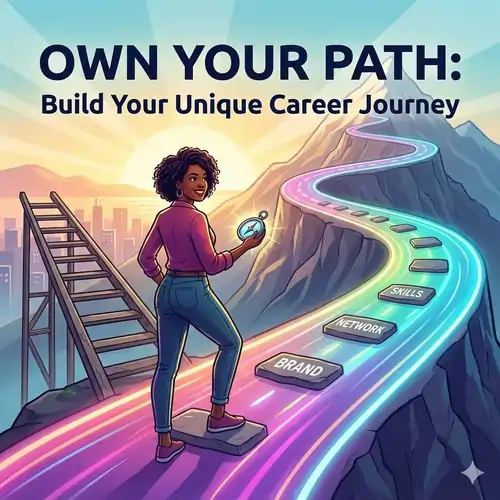
Own Your Path: How to Build a Career with Unshakeable Confidence
Table of Contents
For many women in the modern workplace, the concept of building a career path can feel intimidating. We are often taught to be grateful for the opportunities we are given, rather than feeling empowered to create the opportunities we want. We drift from role to role, hoping that hard work alone will be noticed. But hope is not a strategy.
To truly thrive, you must shift from being a passenger to being the pilot. Building a career path is not about predicting the future with 100% accuracy; it is about equipping yourself with the skills, network, and confidence to navigate whatever the future holds.
In this extensive guide, we will dismantle the old myths of the “corporate ladder” and replace them with a modern, agile approach to professional growth. We will explore the psychology of confidence, the strategy of skill acquisition, and the art of personal branding. If you are ready to stop drifting and start driving, this is your blueprint for building a career path that is uniquely, unapologetically yours.
The Myth of the Straight Line: Redefining Career Success
Decades ago, building a career path was a linear process. You joined a company at 22, worked your way up the hierarchy, and retired at 65 with a gold watch. That world no longer exists.
Today, the average professional changes careers—not just jobs, but entire careers—multiple times in their life. The ladder has been replaced by a “lattice.” You might move up, then move sideways to learn a new skill, then take a step back to balance family life, and then catapult forward into a leadership role.
Understanding this non-linear reality is the first step in building a career path with confidence. It liberates you from the fear of “falling behind.” You cannot fall behind on a path that you are creating yourself. When you embrace the lattice model, every experience becomes a valuable brick in the foundation of your professional life.
The Psychology of Ownership
Why do so many talented women hesitate when it comes to building a career path? Often, it stems from a lack of ownership. We wait for permission. We wait for a manager to tap us on the shoulder and say, “You are ready.”
Confidence comes from taking the reins. When you actively engage in building a career path, you stop viewing setbacks as personal failures and start viewing them as data. You realize that your career is a product you are developing, and you are the CEO of that product.
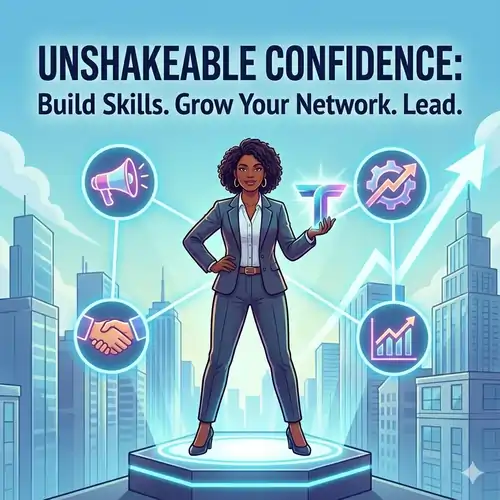
Phase 1: The Internal Audit – Know Yourself First
You cannot build a house without a blueprint, and you cannot succeed in building a career path without self-knowledge. Before you update your LinkedIn or look for a mentor, you must look inward.
Identifying Your Core Values
Your values are your compass. If your career path violates your values, you will eventually burn out, no matter how much money you make.
- Exercise: List your top five values (e.g., Freedom, Creativity, Stability, Impact, Recognition).
- Alignment Check: Look at your current role. Does it honor these values? Building a career path that lasts requires alignment between who you are and what you do.
The SWOT Analysis of You
Corporate strategists use SWOT (Strengths, Weaknesses, Opportunities, Threats) to analyze businesses. You should use it for building a career path.
- Strengths: What comes naturally to you? What do people constantly ask you for help with?
- Weaknesses: What skills are you lacking that are required for the next level?
- Opportunities: What trends in your industry can you leverage?
- Threats: Is AI threatening your role? Is your industry shrinking?
By treating yourself as a business entity, you remove the emotion and gain clarity. This clarity is essential for building a career path that is resilient to economic shifts.
Phase 2: The Strategy – Setting the Destination
Once you know who you are, you need to decide where you are going. However, building a career path isn’t about rigid 10-year plans. It is about setting a “North Star.”
The North Star Concept
Instead of saying, “I want to be VP of Marketing by 2030,” try defining the type of work and impact you want. “I want to lead creative teams that solve complex environmental problems.” This flexibility allows you to pivot. If the role of “VP of Marketing” ceases to exist, your North Star remains relevant. Building a career path based on impact rather than titles makes you antifragile.
SMART Goals vs. OKRs
We all know SMART goals, but high achievers often use OKRs (Objectives and Key Results).
- Objective: Become a thought leader in my industry.
- Key Result 1: Speak at two conferences this year.
- Key Result 2: Publish four articles on industry trends. Using metrics helps you track your progress in building a career path. It turns vague desires into concrete actions.
Phase 3: Skill Acquisition – The Engine of Growth
Confidence is not a personality trait; it is a byproduct of competence. The more you know, the more confident you become. Therefore, building a career path is synonymous with building a skill stack.
The T-Shaped Professional
Recruiters love “T-shaped” employees.
- The Horizontal Bar: You have a broad knowledge of how business works (marketing, finance, ops, emotional intelligence).
- The Vertical Bar: You have deep, specialized expertise in one area (e.g., Data Analytics). When building a career path, ask yourself: Is my “T” balanced? Do I need to go deeper in my niche, or do I need to broaden my understanding of the business?
Upskilling in the Age of AI
The skills that got you here won’t get you there. With the rapid rise of AI and automation, building a career path requires a commitment to lifelong learning.
- Hard Skills: Technical abilities like coding, SEO, or financial modeling.
- Soft Skills: Leadership, empathy, negotiation, and adaptability. Ironically, as tech advances, soft skills are becoming the most valuable currency in building a career path because they are the hardest to automate.
Phase 4: Personal Branding – Visibility is Vital
You can be the best at what you do, but if no one knows it, your career will stall. Building a career path requires you to advocate for yourself. This is not about bragging; it is about visibility.
Defining Your Brand
What do you want to be known for? If someone mentions your name in a room you aren’t in, what three adjectives do you want them to use? Reliable? Innovative? Strategic? Building a career path involves curating your output to match these adjectives. If you want to be seen as “innovative,” share your ideas on industry trends. If you want to be “reliable,” consistently hit your deadlines.
The Digital Footprint
In 2025, your LinkedIn profile is your landing page. It is the first place stakeholders go when they are considering you for an opportunity. Building a career path means treating your LinkedIn not as a resume, but as a portfolio.
- Share case studies of your success.
- Write articles about your industry insights.
- Engage with leaders in your field. Active participation in the digital space is a non-negotiable part of building a career path for the modern woman.
Phase 5: Networking – Building Your Tribe
The old adage is true: Your network is your net worth. But for many women, “networking” feels transactional and gross. To succeed in building a career path, we must reframe networking as “relationship building.”
The Power of Weak Ties
Sociologists have found that most job opportunities come from “weak ties”—acquaintances rather than close friends. Your best friend knows the same people you do. Your acquaintance knows a whole different world. Building a career path requires you to constantly expand the circle of people who know, like, and trust you.
Mentorship vs. Sponsorship
There is a critical distinction here.
- Mentors: Give you advice and coaching. They talk to you.
- Sponsors: Have power and influence. They talk about you when you aren’t in the room. Women are often over-mentored and under-sponsored. Building a career path requires you to cultivate relationships with sponsors—senior leaders who are willing to put their reputation on the line to advocate for your promotion.
Phase 6: Navigating the Pivot – Embracing Change
It is rare to pick a path at 22 and stick to it until 65. You will change. The market will change. Building a career path means knowing when to pivot.
Recognizing the Signs
How do you know it is time to change direction?
- You are no longer learning.
- You dread Monday mornings (consistently, not just occasionally).
- Your industry is in decline.
- Your values have shifted (e.g., you now prioritize flexibility over travel). Pivoting is not quitting. It is a strategic realignment. It is a crucial skill in building a career path.
The Transferable Skills Audit
When you pivot, you aren’t starting from scratch. You are starting from experience. If you are moving from Teaching to Project Management, your skills in “lesson planning” become “project scheduling.” Your skills in “classroom management” become “stakeholder management.” Building a career path across different industries is about translating your existing skills into the language of your new field.
Phase 7: The Confidence Factor – Overcoming Imposter Syndrome
We titled this article “Own Your Path,” and ownership requires confidence. Yet, high-achieving women are often plagued by Imposter Syndrome—the feeling that you are a fraud and will be found out. This is the biggest internal barrier to building a career path.
The Competence-Confidence Loop
We often think we need confidence before we take action. In reality, confidence comes after action.
- You take a small risk.
- You survive (or succeed).
- You gain competence.
- You gain confidence.
- You take a bigger risk. Building a career path is essentially a series of small, calculated risks that build your confidence muscle over time.
Documenting Your Wins
Women are conditioned to be humble. But humility doesn’t mean hiding your light. Keep a “Hype Doc” or a “Win Folder.” Every time you get a compliment, finish a project, or solve a problem, write it down. When you are negotiating a raise or interviewing for a new role, review this folder. It provides the objective evidence you need to feel confident in building a career path that reaches higher.
Phase 8: Negotiation – Asking for What You’re Worth
You cannot build a sustainable career on an unsustainable salary. Financial confidence is a pillar of professional confidence. Building a career path involves regular, strategic negotiation.
Knowing Your Market Value
Do not guess. Use tools like Glassdoor, Payscale, or industry reports to find the data. When you know what the market pays, you aren’t asking for a favor; you are asking for a market correction.
Negotiating Beyond Salary
If the budget is tight, negotiate for things that aid in building a career path:
- Professional development budget (conferences, courses).
- Flexible hours (to work on side projects or education).
- Mentorship from the C-suite. Everything is negotiable if you frame it as a win-win.
Phase 9: Resilience – Bouncing Back from Setbacks
You will get rejected. You will be passed over for a promotion. You might even get fired. These are not ends; they are plot twists. Building a career path requires resilience.
The Growth Mindset
Carol Dweck’s concept of the Growth Mindset is essential here.
- Fixed Mindset: “I didn’t get the job because I’m not good enough.”
- Growth Mindset: “I didn’t get the job because I need to improve my interview skills or gain more experience in X.” When you view building a career path through a growth mindset, failure becomes data. It becomes a teacher.
Rest as a Strategy
Burnout will derail your career faster than any lack of skill. We often think building a career path means grinding 24/7. But you cannot drive a car with an empty tank. Strategic rest—disconnecting, sleeping, pursuing hobbies—is what fuels your creativity and endurance. It is a professional necessity.
Phase 10: Leaving a Legacy – Mentoring Others
The final stage of building a career path is turning around and pulling others up.
The Cycle of Empowerment
When you mentor other women, you reinforce your own knowledge. You build a reputation as a leader who creates other leaders. This contributes to your legacy. Building a career path is not a solitary pursuit. It is a communal one. When you help others rise, you rise with them.
Action Plan: Your 30-Day Launchpad
You have read the theory. Now, let’s put it into practice. Here is a 30-day plan to jumpstart your momentum in building a career path.
- Week 1: The Audit. Complete your Values assessment and SWOT analysis. Update your resume and LinkedIn profile to reflect where you are going, not just where you have been.
- Week 2: The Network. Reach out to three “weak ties.” Invite them for a virtual coffee just to catch up. Do not ask for a job; just nurture the relationship.
- Week 3: The Skill. Identify one skill gap. Sign up for a course, watch a webinar, or buy a book to address it. Commit to building a career path that prioritizes learning.
- Week 4: The Brand. Post one piece of content on LinkedIn that showcases your expertise. Share an insight, a lesson learned, or a commentary on industry news.
FAQs About Building a Career Path
1. Is it ever too late to start building a career path?
Absolutely not. The concept of “too late” is a myth. Many successful women pivoted in their 40s, 50s, and 60s. Vera Wang entered the fashion industry at 40. Julia Child wrote her first cookbook at 50. Building a career path is a lifelong process. Your previous experience is not wasted time; it is transferable wisdom that gives you a unique edge in your new field.
2. How do I start building a career path if I don’t know what I want to do?
Action breeds clarity. You will rarely figure out your passion just by thinking about it. You have to try things. Start by “prototyping” different careers. Shadow someone in a different department. Take a weekend workshop. Start a side project. Through the process of active experimentation, you will discover what energizes you, which is the first step in building a career path.
3. How can introverts succeed in building a career path when networking is so important?
Networking does not have to mean loud cocktail parties. Introverts often excel at one-on-one connections and deep listening, which are powerful networking superpowers. Focus on deep, meaningful conversations with a few people rather than trying to meet everyone. Building a career path as an introvert leverages quality over quantity. Use digital platforms like LinkedIn to break the ice if face-to-face interaction drains you.
4. What should I do if my current job doesn’t align with the career path I want to build?
Do not quit immediately (unless it is toxic). Instead, treat your current job as an angel investor in your future career. It pays the bills while you upskill. Look for ways to mold your current role to fit your goals. Can you take on a project that utilizes the skills you want to learn? Can you volunteer for a cross-functional team? Use your current environment as a laboratory for building a career path while you plan your exit.
5. How do I balance building a career path with raising a family?
This is the challenge of our time. The key is to let go of “balance” (which implies equal weight at all times) and embrace “seasons.” There will be seasons where you sprint in your career, and seasons where you coast to focus on family. That is the beauty of the “lattice” career model. Be transparent about your boundaries. Automate or outsource household tasks where possible. Remember that building a career path is a marathon, not a sprint; it is okay to walk for a few miles.
Conclusion: The Path is Made by Walking
There is no perfect map. There is no single “right” way to do this. Building a career path is a messy, beautiful, confusing, and rewarding process.
The most important thing to remember is that you are in the driver’s seat. You get to decide when to speed up, when to slow down, and when to change lanes. You define what success looks like.
Do not let fear paralyze you. Do not let the expectations of others define you. Trust in your ability to figure it out. You have survived 100% of your bad days, and you have learned from every challenge.
Start today. Send that email. Sign up for that class. Speak up in that meeting. Every small action is a brick in the road you are laying. You are capable, you are worthy, and you are ready to start building a career path that you can be proud of.