
Life rarely follows a straight line. It is a series of peaks and valleys, and while the peaks are exhilarating, the valleys can be dark, confusing, and overwhelming. whether it is the loss of a job, a health crisis, a relationship breakdown, or a general sense of global anxiety, we all face moments where hope feels like a distant memory.

Finding the Light: How to Stay Positive When Life Gets Tough
Table of Contents
In these moments, the concept of staying positive during hard times can feel like an impossible request. It might even feel insulting. When your world is crumbling, being told to “look on the bright side” can feel dismissive of your pain. However, true positivity is not about ignoring reality or suppressing difficult emotions. It is about building a psychological immune system that allows you to endure, adapt, and eventually thrive, even when the odds are stacked against you.
This guide is not a collection of empty platitudes. It is a deep dive into the psychology, strategy, and practical application of resilience. We will explore exactly how staying positive during hard times works, why it is essential for your survival, and the actionable steps you can take today to find the light, no matter how dark the room feels.
The Psychology of Struggle: Why Negativity Feels So Natural
To understand the mechanics of staying positive during hard times, we first have to understand why it is so difficult. Humans are not naturally wired for constant happiness; we are wired for survival.
The Negativity Bias
Our brains possess a “negativity bias.” In prehistoric times, paying attention to a rustle in the bushes (a potential predator) was more important than admiring a beautiful sunset. The former kept you alive; the latter was just a bonus. Today, this manifests as a tendency to fixate on problems, insults, and dangers while glossing over compliments and safety.
When you are in a crisis, your brain’s amygdala (the fear center) hijacks your cognitive function. It floods your system with cortisol and adrenaline. This physiological state makes staying positive during hard times an uphill battle because your biology is screaming at you to panic, freeze, or flee.
Cognitive Tunneling
During periods of high stress, we experience “cognitive tunneling.” Our focus narrows to the immediate threat. If you are in debt, you can only think about money. If you are sick, you can only think about pain. This tunnel vision blocks out perspective, making it nearly impossible to see solutions or hope.
Understanding this is the first step. You are not “bad” at being happy. You are not “weak” for feeling overwhelmed. Your brain is simply doing what it was designed to do: protect you. The art of staying positive during hard times involves gently overriding this default setting and teaching your brain that it is safe to widen its perspective.
Defining True Positivity: It’s Not About Being Happy All the Time
There is a misconception that staying positive during hard times means pasting a fake smile on your face and pretending everything is fine. This is known as “toxic positivity,” and it is psychologically damaging.
True positivity—the kind that helps you survive—is grounded in reality. It is not the absence of sadness; it is the presence of hope alongside that sadness.
The Stockdale Paradox
Admiral James Stockdale, who was a prisoner of war for seven years, coined a concept that is crucial for staying positive during hard times. He noted that the optimists in the prison camp—the ones who said, “We will be out by Christmas”—often died of broken hearts when Christmas came and went.
Stockdale survived by holding two opposing thoughts in his head simultaneously:
- You must retain faith that you will prevail in the end.
- You must confront the brutal facts of your current reality.
This is the blueprint. Staying positive during hard times requires you to look your problems in the eye and acknowledge their severity, while simultaneously believing in your capacity to handle them.
Phase 1: Regulating Your Nervous System
You cannot think your way out of a crisis if your body is in fight-or-flight mode. Before you can work on your mindset, you must work on your physiology. Staying positive during hard times starts with the body.
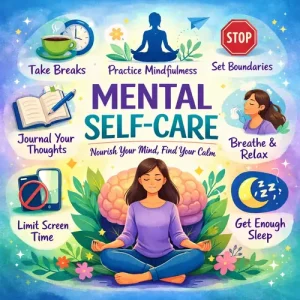
The Power of the Breath
When you are stressed, you take short, shallow breaths. This signals to your brain that you are in danger. By consciously slowing your breath, you hack your nervous system.
- Technique: Try the 4-7-8 method. Inhale for 4 seconds, hold for 7, and exhale for 8. This activates the parasympathetic nervous system, which is the physical foundation for staying positive during hard times.
Sleep as a Defense Mechanism
Sleep deprivation destroys emotional regulation. Everything seems worse when you are tired. If you are struggling with staying positive during hard times, prioritize sleep above almost everything else. If anxiety keeps you awake, use magnesium supplements, weighted blankets, or guided sleep meditations (Yoga Nidra) to force your body into rest.
Movement and Metabolism
Stagnant energy leads to stagnant thoughts. You do not need to run a marathon, but you must move. a 15-minute walk outside exposes you to sunlight (boosting serotonin) and gets your blood flowing. Often, the mental block preventing you from staying positive during hard times is actually a physical lack of movement.
Phase 2: Cognitive Reframing and Mindset Shifts
Once your body is relatively calm, you can engage your mind. Cognitive reframing is a core component of Cognitive Behavioral Therapy (CBT) and is essential for staying positive during hard times.
The “Control the Controllables” Matrix
Anxiety usually stems from trying to control things that are outside your power.
- Draw a circle. Inside the circle, write what you can control: your reaction, your routine, your words, your effort.
- Outside the circle, write what you cannot control: the economy, other people’s opinions, the weather, the past.
- The Strategy: Focus 100% of your energy on the inside of the circle. Staying positive during hard times becomes much easier when you stop wasting energy on the uncontrollable variables.
Changing the Narrative
We all narrate our lives. When things go wrong, the narrator often becomes a critic. “Why does this always happen to me?” “I am a failure.”
- The Reframe: Change the question. Instead of “Why is this happening to me?”, ask “What is this trying to teach me?” or “How can I use this?”
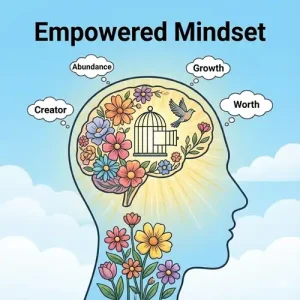
- This shift moves you from a victim mentality to a creator mentality. Staying positive during hard times is largely about editing your internal script from a tragedy to a hero’s journey.
The “This Too Shall Pass” Mentality
Permanence is the enemy of hope. When we suffer, we feel like the suffering will last forever. History proves otherwise. Every winter turns to spring. Every storm runs out of rain. Reminding yourself of the impermanence of your situation is a key tactic for staying positive during hard times.
Phase 3: Curating Your Environment
Your environment dictates your emotions more than you realize. If you are surrounded by chaos and negativity, staying positive during hard times becomes nearly impossible.
The News Diet
In the modern world, we have access to 24/7 global tragedy. While it is important to be informed, constant “doomscrolling” traumatizes your nervous system.
- Action Step: Limit news consumption to 15 minutes a day. Unfollow social media accounts that make you feel angry or inadequate. You cannot practice staying positive during hard times if you are voluntarily ingesting poison through your phone screen.
The Company You Keep
Emotions are contagious. If your friends are constantly complaining, you will mirror that vibration.
- Seek the Uplifters: Surround yourself with people who validate your feelings but also encourage your growth. Staying positive during hard times is a team sport. You need teammates who pass you the ball, not ones who deflate it.
Clutter and Clarity
External mess leads to internal stress. If your life feels out of control, clean your kitchen. Organize your desk. Make your bed. These small acts of order provide a sense of agency. They are tangible proof that you can improve your immediate world, which acts as momentum for staying positive during hard times in the broader sense.
Phase 4: The Practice of Active Gratitude
Gratitude is often dismissed as “fluff,” but neuroscientifically, it is a powerhouse. It forces the Reticular Activating System (RAS) in your brain to scan the environment for good things rather than threats.
The “Three Good Things” Exercise
Every night before bed, write down three things that went well that day and why they went well.
- They don’t have to be huge. “The coffee was hot,” “I saw a nice dog,” “I finished my work early.”
- By doing this, you are training your brain to hunt for positives throughout the day. This training is vital for staying positive during hard times because it ensures you don’t miss the small glimmers of light in the darkness.
Gratitude in the Trenches
It is easy to be grateful when you are on vacation. It is hard when you are in pain.
- The Challenge: Try to find gratitude within the struggle. “I am grateful for the loss of this job because it is forcing me to finally pursue the career I actually want.” “I am grateful for this difficult relationship ending because I learned what I deserve.” This is advanced-level staying positive during hard times.
Phase 5: Taking Action and Building Momentum
Passivity feeds depression. Action feeds hope. You cannot think your way into a new life; you have to act your way into it.
The 1% Rule
When you are overwhelmed, big goals are paralyzing. Forget the big goals. Just improve your situation by 1% today.
- Wash one dish. Send one email. Do 5 pushups.
- Action creates evidence. Evidence builds confidence. Staying positive during hard times requires you to see yourself as a person who does things, rather than a person who has things done to them.
Helping Others
One of the fastest ways to get out of your own head is to help someone else. When you are in a crisis, your world becomes very small—it is just you and your pain.
- The Shift: By volunteering, helping a neighbor, or even just listening to a friend, you expand your world again. You realize you still have value to give. Staying positive during hard times is often achieved by becoming a source of positivity for others.
Phase 6: Spiritual and Existential Resilience
For many, staying positive during hard times is a spiritual practice. Whether you are religious or not, connecting to something larger than yourself is comforting.
Surrender vs. Giving Up
Giving up means you stop trying. Surrender means you stop fighting the reality of the moment. It is an acceptance that allows you to flow with the river of life rather than drowning by swimming upstream. Staying positive during hard times requires a degree of surrender—admitting that you don’t have all the answers, and that is okay.
Finding Meaning in Suffering
Viktor Frankl, a psychiatrist and Holocaust survivor, argued that humans can endure almost any “how” as long as they have a “why.”
- If you can find meaning in your struggle—whether it is spiritual growth, helping others, or building character—the suffering becomes bearable. Staying positive during hard times is essentially the search for meaning amidst chaos.
When Positivity Is Not Enough: Seeking Professional Help
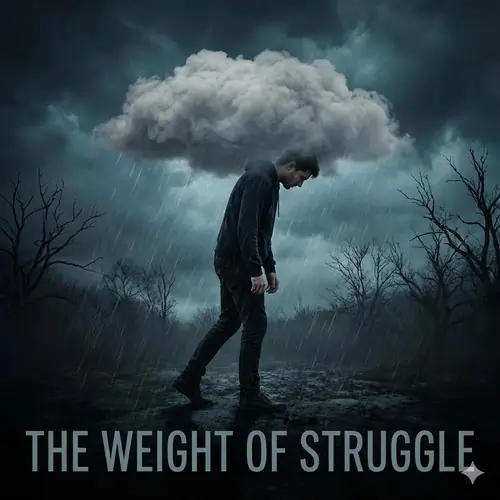
It is crucial to distinguish between “hard times” and clinical mental health conditions. Sometimes, staying positive during hard times is not a matter of willpower; it is a matter of brain chemistry.
If your sadness is persistent, prevents you from functioning, or leads to thoughts of self-harm, no amount of gratitude journaling will fix it alone. In these cases, staying positive during hard times means having the courage to seek therapy or medication. This is not a failure; it is using the tools available to you.
The Long-Term View: Building Resilience for the Future
Life is cyclical. You will get through this hard time, but there will likely be another one in the future. The work you do now—mastering the art of staying positive during hard times—is an investment in your future self.
You are building “resilience capital.” Every time you survive a bad day, you prove to yourself that you are unbreakable. You are developing a toolkit that will make the next valley shallower and easier to navigate.
Remember, a diamond is just a piece of charcoal that handled stress exceptionally well. By staying positive during hard times, you are undergoing the pressure required to turn into something unbreakable and brilliant.
FAQs About Staying Positive During Hard Times
1. Is staying positive during hard times simply ignoring my problems?
No, absolutely not. Ignoring problems is denial, which leads to bigger issues later. Staying positive during hard times is about acknowledging the problem fully but choosing to focus your energy on solutions and hope rather than despair. It is an active coping mechanism, not a passive head-in-the-sand approach.
2. How can I practice staying positive during hard times if I suffer from anxiety or depression?
If you have a clinical condition, “positivity” looks different. It might just mean getting out of bed or brushing your teeth. Do not compare your journey to others. For those with anxiety, staying positive during hard times often involves grounding techniques, medication, and therapy. It is about compassion for yourself, not forcing a happy mood.
3. How do I help a friend who is struggling without using “toxic positivity”?
Avoid saying phrases like “Everything happens for a reason” or “Just be happy.” Instead, practice empathy. Say, “I know this is incredibly hard, and I am here with you.” You can support them in staying positive during hard times by simply being a consistent, non-judgmental presence and helping them with small, practical tasks.
4. Can staying positive during hard times actually improve my physical health?
Yes. Studies show that chronic stress and negativity suppress the immune system and increase the risk of heart disease. Conversely, optimism and staying positive during hard times have been linked to lower blood pressure, better sleep, and faster recovery from illness. Your mindset communicates directly with your cells.
5. What is the quickest way to shift my mindset when I feel a spiral coming on?
Change your state. Physically move your body. Splash cold water on your face. Put on upbeat music. Breaking the physical pattern interrupts the mental pattern. This “pattern interrupt” gives you a momentary window to choose a better thought, which is the first step in staying positive during hard times.
Conclusion
The journey of staying positive during hard times is the journey of life itself. It is the refusal to let the darkness win. It is the quiet, stubborn belief that morning always comes, no matter how long the night.
You may feel exhausted right now. You may feel like you have run out of options. But the fact that you are reading this article proves that there is a spark of hope left in you. That spark is all you need.
Take a deep breath. Drink a glass of water. Look at the problem in front of you and say, “I can handle this.” Because you can. You have survived 100% of your bad days so far, and you will survive this one too.
Staying positive during hard times is not a talent; it is a skill. And like any skill, you get better at it with practice. Keep practicing. Keep believing. The light is coming.